
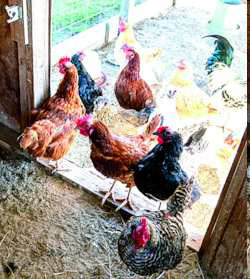
Highly pathogenic avian influenza, HPAI, specifically HPAI H5N1, commonly referred to as “bird flu,” has rippled far beyond farms and impacted Americans of all walks of life.
The current avian influenza outbreak affecting both commercial and backyard flocks began in the U.S. in early 2022. The outbreak is now entering the fourth year and continues to cause disruptions in the poultry industry triggering increases in eggs and other poultry product prices at grocery stores across the U.S.
Terry Hensley, DVM, assistant agency director at Texas A&M Veterinary Medical Diagnostic Laboratory, TVMDL, and Texas A&M AgriLife Extension Service veterinarian, and Morgan Farnell, Ph.D., professor and AgriLife Extension program leader in the Texas A&M Department of Poultry Sciences, both in Bryan-College Station, are experts with experience in poultry diseases, including HPAI.
They expect instances of the disease to occur as waterfowl, which are the primary carriers for the virus, continue their seasonal migration.
Farnell and Hensley provided insights into the disease, its impact on humans and domestic animals and how to reduce a backyard poultry flock’s chance of exposure.
Hensley said HPAI is a viral infection in the same family as human influenza that can present a respiratory infection in domesticated poultry, including chickens, ducks, turkeys, guineas, and quail. HPAI has a mortality rate in chickens approaching 100%.
An infected bird will infect other birds very quickly, with most deaths occurring within 24 to 48 hours.
Wild waterfowl are the natural reservoir of avian influenza viruses including HPAI H5N1.
During the annual fall and spring migration, the virus periodically spills over into domestic poultry creating costly disease events. Infections have been reported in every U.S. state, Hensley said.
Poultry can be exposed by being in the same space as infected birds. Birds pick up virus particles through respiratory exposure as well as through feces or having access to an area frequented by wild birds.
The virus thrives in cold weather. Outbreaks in the U.S. typically subside or completely cease in summer months due to the heat. However, since 2022, outbreaks of HPAI H5N1 in the U.S. diminish during the summer only to see a resurgence during fall, winter and spring. So, Hensley said only time will tell whether this strain of HPAI is here to stay and will continue to pose a threat to the poultry industry and backyard flocks.
Hensley said dead birds are a clear potential sign and are often the first thing owners notice. Domestic birds that look sick, lethargic, depressed or with ruffled feathers could be showing early signs of infection. Poultry infected with avian influenza will likely die within hours or a day of showing signs. Sometimes, sudden death without apparent clinical signs can be seen.
There is no treatment for birds infected with avian influenza, Hensley said. Producers who suspect they have infected birds, should contact the Texas Animal Health Commission, TVMDL or their local AgriLife Extension agent. Those agencies can guide them through the appropriate next steps, which include submitting samples to TVMDL for testing.
Prevention is the only way to reduce the risk of avian influenza for backyard poultry flocks. Farnell said the risks “will never be zero, but a healthy dose of paranoia along with following biosecurity protocols consistently can help protect your birds.”
Hensley said there have been 71 human cases of avian influenza across the U.S. as of Jan. 26, including two deaths. However, the health risk to humans remains low, according to the Centers for Disease Control and Prevention. The Centers for Disease Control and Prevention has tips to prevent human infections.
The Texas Animal Health Commission has confirmed six positive avian influenza cases in counties around the state since Nov. 12, 2025.
Most of those positive infections were in wild birds or backyard flocks.
Federal and state agencies will continue to monitor the spread of avian influenza.
According to the Centers for Disease Control and Prevention, more than 186 million commercial and backyard poultry have been affected by avian influenza since January 2022.
Those interested in avian testing should call one of TVMDL’s poultry laboratories in Gonzales or Center, or one of the agency’s full-service laboratories in College Station or Canyon. For more information on TVMDL’s testing services, visit tvmdl.tamu.edu.