
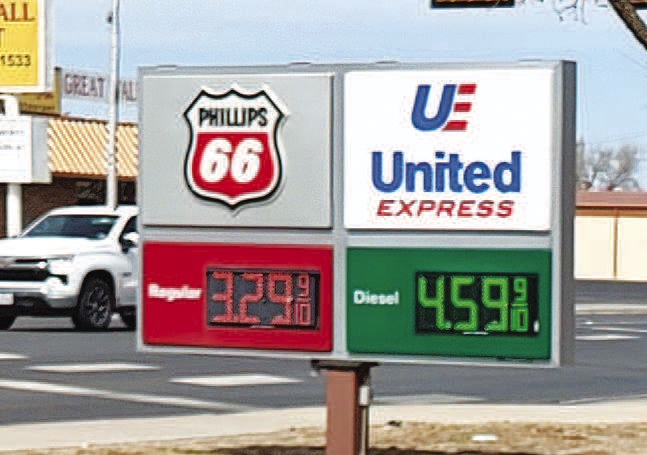
Gas prices in the U.S. are surging, with averages climbing past $3.47 per gallon and potentially heading toward $4 to $5, driven by oil breaching $100 a barrel due to intensified conflict in the Middle East. Experts predict rapid increases of 20 to 50 cents per gallon as global supply chains face disruption.
Current gas prices in Levelland were averaging $3.11 per gallon for regular and $3.60 for mid-grade, though that could change overnight.
The surge is tied directly to the conflict affecting oil shipments, with analysts predicting oil could reach $120–$150 per barrel if disruption continues.
West Texas Intermediate (WTI), the U.S. benchmark, and Brent crude, the international benchmark, both jumped to nearly $120 a barrel early Monday.
The price of crude is the single largest factor in how much U.S. drivers pay for fuel. And higher oil prices are usually felt at the pump within a couple of weeks.
Fuel prices began to climb as the Iran war disrupted the flow of oil through the Strait of Hormuz, the key channel that connects the Persian Gulf to the Gulf of Oman and the Arabian Sea. About a fifth of the world’s oil passes through the strait.
While there are pipelines in Saudi Arabia and the UAE that can avoid the passage, the U.S. Energy Information Administration says most volumes that transit the strait have no alternative means of exiting the region.
Several experts on the situation spoke out as gas prices shot up.
Prediction markets were already predicting gas prices would surge by the end of March. Polymarket predicts gas prices hitting $5 by the end of March.
GasBuddy analyst Patrick De Haan in a report said that with additional attacks across the Middle East over the weekend pushing oil above $100 per barrel for the first time in years, fuel markets are now rapidly recalibrating to the risk of prolonged disruption to global supply flows.
As of Monday, the average national cost of gas is $3.48 per gallon, up 48 cents since last week and 58 cents from a month ago, according to data from AAA.
Prices are currently highest in California, where drivers were paying an average of $5.20 per gallon, and in Washington state, where gas hit $4.63 per gallon. Kansas currently has the country's lowest average price, at $2.92 for a gallon of regular. Texans were paying an average of $3.13, depending on the region of the state.
The price of diesel, which has a tighter inventory than regular gas, has also skyrocketed, rising nearly 89 cents over the last week to $4.66 a gallon.
According to David Kelly, chief global strategist at J.P. Morgan Asset Management, even if oil production and distribution resume relatively quickly, U.S. gas prices could stay elevated until the fall due to higher seasonal demand this summer President Trump reacted to rising prices, announcing that the U.S. International Development Finance Corporation will insure ships sailing through the Persian Gulf up to approximately $20 billion, although didn’t say when it will start extending maritime reinsurance. He said he expects short-term increases and the rise in gas prices is a small price for American consumers to pay.
Bernard Yaros, lead U.S. economist at Oxford Economics, said rising gas prices will hit lower-income households the hardest leading to a reduction in savings, more credit being taken out in consumer loans, and more pockets of stress. He expects U.S. inflation to rise above 3%.
Beyond the financial concerns regarding gas prices and inflation, should gas prices continue skyrocketing, it could have a major impact on the midterm elections.
Prediction markets were already predicting gas prices would surge by the end of March. Polymarket predicts gas prices hitting $5 by the end of March.