
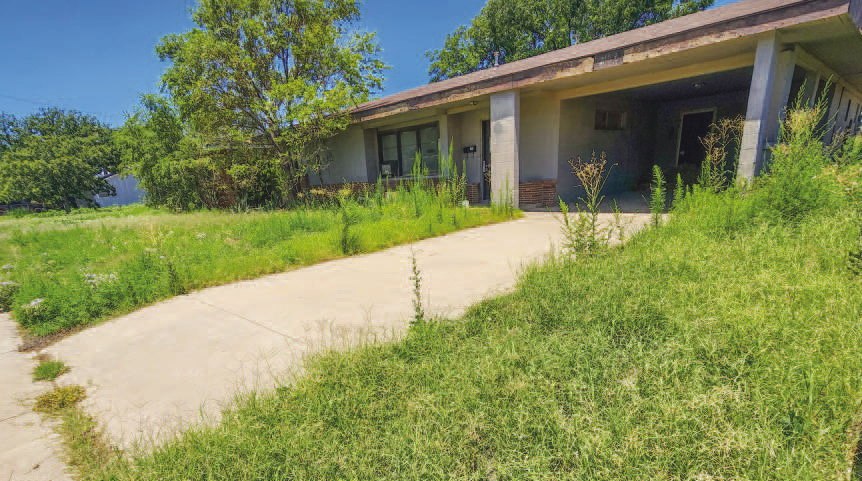
Wanting to work with Levelland citizens, the City of Levelland’s Code Enforcement Department continues working to protect public health, life and safety.
With recent heavy rains, Interim Building Inspector, Eli Colunga, encourages citizens to keep up property during the summer months.
“We want the town to look nice,” Colunga said. “The Chamber of Commerce is always pushing for that with Keep Levelland Beautiful, and I think all citizens need to take part in that.”
One way citizens can keep their property nice is by keeping weeds below six inches in height. Weeds taller than that can become a habitat for mosquitos, snakes, mice and other pests. They can also pose safety risks for people living in the area.
“Safety wise, if you've got high weeds and you're walking through the property, you don't know if you're going to hit something and fall into a hole, and it brings in more critters, so it becomes a safety issue,” Colunga said. “I'm not saying you have to have an immaculate lawn, just keep your weeds mowed, keep them down. It still would look decent.”
Colunga said the city does what it can to take care of weeds and other issues, but they are limited in their budget for hiring contractors.
“We are set in our budget,” Colunga said. “Once that money runs out, and we don't get the compliance, then obviously we can't hire to go mow that, so we'll probably revert to issuing fines.”
When addressing an issue, the city will send a notice to the property owner asking them to bring their property in compliance with city ordinances. The owner can then take care of it, or the city will take action.
“If we can’t go out there and mow then we file a complaint with the court,” Colunga said. “It's like whenever you get a traffic ticket. They’re going to do a summons, and that's essentially what it does.”
Along with weeds, the department has been busy addressing substandard and dilapidated structures, which can be dangerous to the people and structures around them as well as attract crime and unwanted wildlife.
“The main reason for substandard structures or dilapidated structures is they tend to be unsecure,” Colunga said. “We want to keep people out of it because those structures tend to be unsafe because they're falling apart.”
For those living in substandard and dilapidated structures, Colunga said that even though issues may not be visible to the public, the city will still address them if they are a safety hazard for the occupants.
“I’ll give an example of somebody living without active water,” Colunga said. “That’s required because it comes down to health, safety, sanitation. You need water that's running through some pipes, and you need your sink for health reasons” When required, Colunga mentioned that the process for demolishing substandard and dilapidated structures usually starts with citizen or police complaints.
“We get that phone call, sometimes from PD,” Colunga said. “They'll get a phone call late at night, and they're addressing some squatters in the house. Typically we'll get that phone call or email in the morning from PD saying, ‘We had a phone call addressing some squatters. Can you address the substandard structure?’ and we get involved that way as well.”
They then inspect the structure, secure it and start trying to find the owners of the property to notify them of the compliance issue. After notifying the owner to try to get the structure into compliance, if needed, they will hire a contractor to demolish the structure after a lengthy notice period.
“If it’s unsecure, we want to try to keep people out of there and secure access to that building,” Colunga said. “So we end up boarding the structure up, and then that's what starts the process.”
According to Colunga, in the last five years about 90 substandard structures have been demolished. This includes those torn down by the city and homeowners. A majority of the structures demolished are residential with a handful being commercial. While tearing down residential structures can stack up in costs, commercial structures can become expensive quickly as one structure totaled $30,000 for demolition. If the invoices for those projects are not paid by the property owner, then the City might shoulder the cost and will do what they can until their budget runs dry.
To help recover costs of tearing down structures if the City has to cover the bill, a lien will be placed on the property.
“One of the things that limits what we can do is obviously budget,” Colunga said. “I think we've done quite a bit in the last five years, but we're limited, and we do the best that we can with the resources that we have.”
Colunga said that the City is not trying to single individuals out in any part of Levelland. Structural and weed compliance problems happen everywhere, so they take care of them everywhere.
“We’re essentially picking on anybody who's in violation,” Colunga said. “Someone might say you're just picking on the West side of town because it's older and you're not over in areas such as the Country Club. I promise there are people that don't take care of their property in all areas of the city. We’ve citated people and we’ve cleaned up properties all over, so it's everywhere.”
Ultimately, one reason for keeping up with properties is to help promote the city’s growth.
“We have businesses coming in, we're working with people to get some housing to come in, and if our town is not taken care of, and it doesn't look safe and inviting then who's going to want to come here,” Colunga said. “So absolutely, it has to do with helping our city we live in grow.”
Colunga said he and other city employees will help those who communicate with them to get substandard structures and overgrown weeds into compliance with city ordinances.
“We're not there to cite people to make money, to make them mad or to be a tyrant,” Colunga said. “People need to understand that we will work with people as long as they're willing to work with us.”
For those with questions, feel free to contact the city, inspections department, or Colunga for further information.
“You do your part, take care of your property and then we won’t get on your back,” Colunga said. “We want a safe place to live and a nice, beautiful, desirable place to work, and play.”