
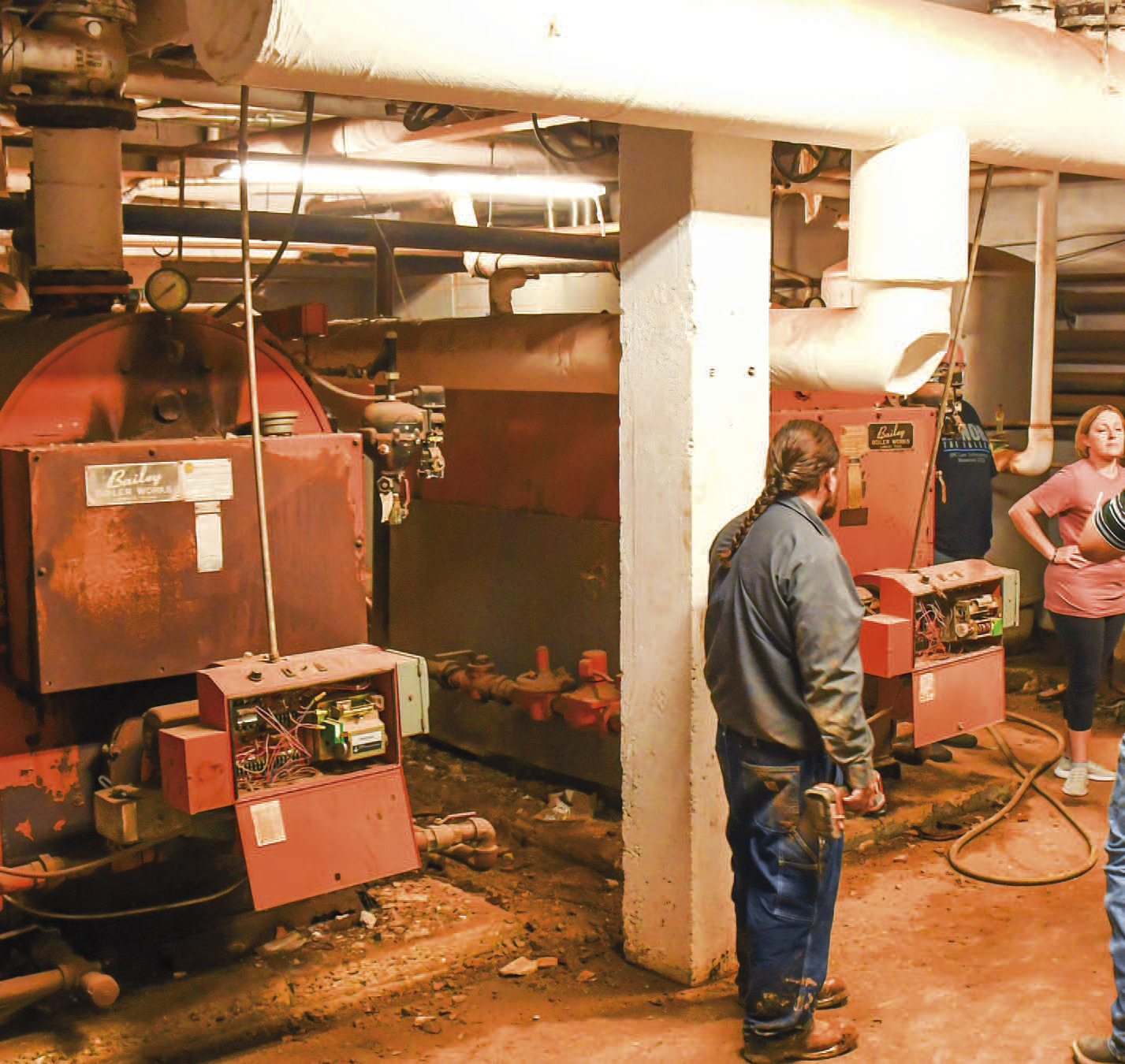
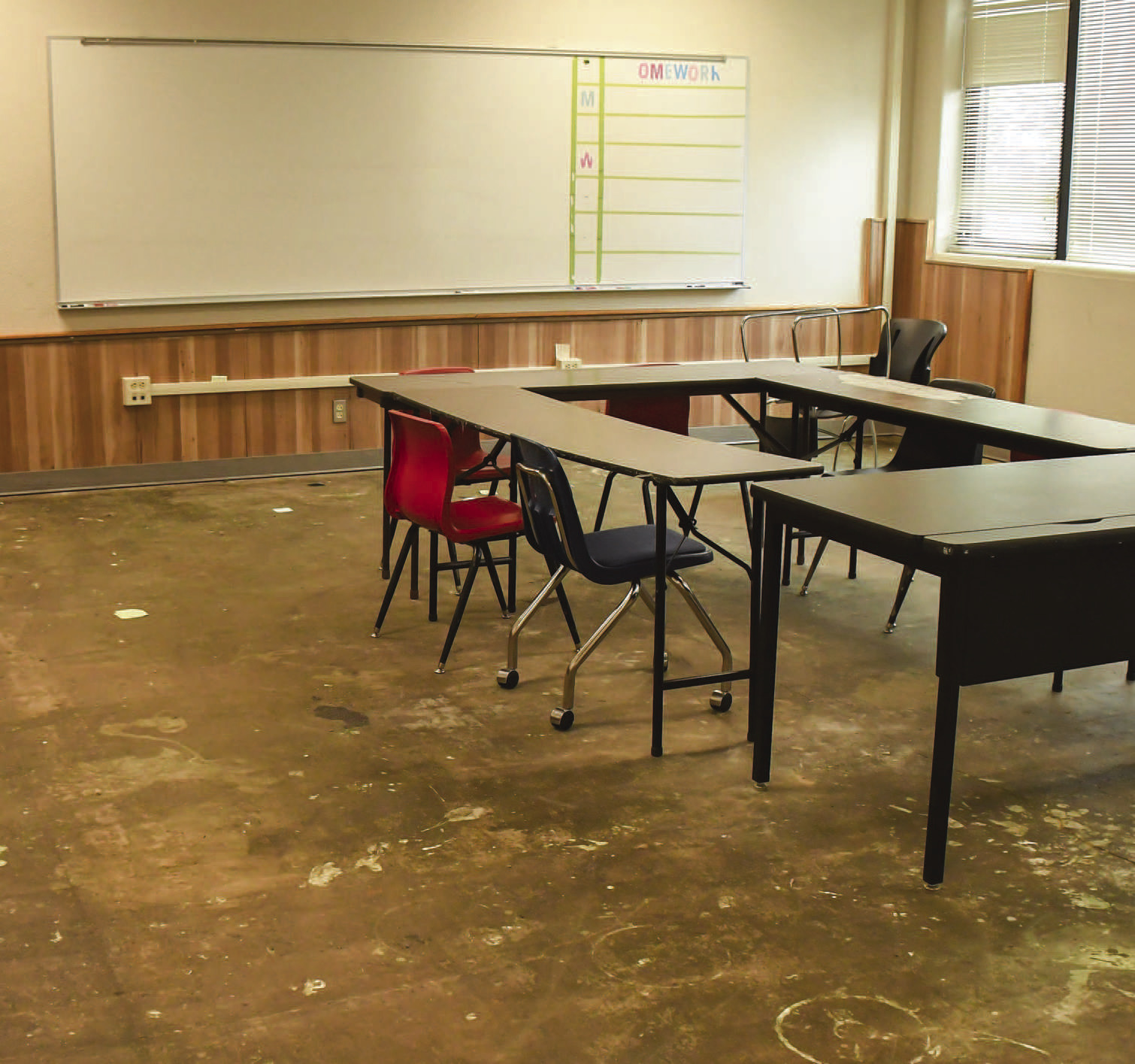
Levelland ISD held a tour, presentation and a Q and A session Monday to discuss the closure of Levelland Intermediate School in a public meeting.
The public meeting began with a presentation from superintendent Rebecca McCutchen, chief financial officer Teresa Montemayor and maintenance director Adam Oliva.
The meeting opened with McCutchen addressing the age of the building. McCutchen said she previously believed the building to have opened in 1938 but after looking at photos, receiving comments from the public and consulting architects found the first class to occupy the building was the class of 1948-1949.
During this presentation McCutchen said the goal of the immediate campus closure was to not bankrupt the school district and ensure long-term sustainability and financial viability of the school district. McCutchen also said that in the absence of additional funding the current operation model will bankrupt the school district.
To avoid financial crisis, McCutchen said the district has absorbed 13 positions at the central office and across the campuses and decided to close the campus with the most financial burden. McCutchen said the decision was coupled with declining enrollment due to the lack of kids in this part of the world and less job opportunities resulting in people moving near Interstate 35.
McCutchen addressed the financial status of the school district by showing a breakdown of the current balance. There is a total of $16.4 million in the current audit fund balance. McCutchen said the state does not like when there is a large fund balance without it being designated. Of the $16.4 million, $5.7 million is designated to the audited capital expenditure fund balance for capital improvements. McCutchen said capital improvements could be used to purchase new buses, parking lot maintenance or roof repairs if a roof blew off of a school building.
McCutchen said the state requires the district to retain three months of operating expenditures. The district has $6.9 million that they have to retain in order to be able to sustain the district operations for three months. The remaining undesignated available fund balance for the district is $3.7 million.
McCutchen expressed that this is a healthy fund balance for a district of this size, but the district has to be fiscally conservative.
McCutchen turned the presentation over to Montemayor to discuss the 2013 bond. Montemayor began her portion of the presentation by showing the parts of the presentation from the 2013 bond. The bond items renovation features included a fire alarm and security system; heating and air conditioning; accessible restrooms; window replacement and stone repair; bus drive and asphalt paving; roofing; new ceilings, lights, painting and flooring; gym lighting; science laboratories; electrical distribution; and auditorium seating.
Montemayor addressed the current issues at the intermediate school that currently need replaced or repaired. Growth, electrical, plumbing, heating and cooling were items Montemayor said were brought to the communities attention in 2012.
Montemayor said issues like sewer, plumbing, ADA compliance, roof repair, and electrical issues in the boiler room were out of scope for the 2013 bond. These issues were not a part of the package for the bond but it was recommended that the district continue to work on these issues in the future.
The roof was 15 years old at the time of the bond passing and was listed as something that should be considered to be replaced soon.
Montemayor gave a true cost of repair for $8.1 million with the cost rising to $9.8 million with inflation. This true cost does not constitute the price from bids but is an estimate cost of repairs in the current market.
Montemayor said the cost to repair the roof alone would consume a large portion of the $3.7 million in the undesignated available fund balance without being able to address HVAC, plumbing and electrical issues.
Montemayor turned the presentation over to Oliva to address the current maintenance issues at the intermediate school. Oliva said he has been the maintenance director since August and his team hit the ground running since his time here.
Oliva said the lifespan of a tar and gravel roof is 15 to 20 years and the intermediate roof is well past the estimated lifespan. Oliva showed photos of the roof drains and said they are completely plugged up by the gravel. Oliva said the sitting water will then find a way to drain and has disrupted the structure of the building causing cracks on the plaster walls inside of the classrooms.
Oliva then showed photos of water damage to the second-floor ceiling classrooms. Oliva said he found the repairs being made to the roof were not a commercial fix which is what the district has changed to.
“There’s only a certain amount of repairs that you can do before we’re in desperate need of replacement which we are right now,” Oliva said.
Due to the age and asbestos, Oliva said they have not been able to find a company that is willing to work in the basement. Oliva also addressed the twopump system used for the sewers and the one working pump.
“We’ve called several companies to give us a bid just to add another pump and rerouting of the piping and no one will touch that,” Oliva said. “If that one pump goes out, our school floods. We literally have about five sub pumps that we carry in our trucks just in case something like that happens.”
Oliva addressed the HVAC system partially in the ceiling of the first floor. He said above the units are asbestos tiles which are not a cause for concern as long as they are not disturbed along with the additional of the drop ceilings.
The concern starts when the water damage knocks down the drop ceiling tiles and then begins the abatement process.
Oliva also showed photos of the plumbing, utility lines and tunnel systems and said there are foundation cracks in addition to asbestos and water damage. The district has six-month periodicals and three-month checkups for the asbestos in the waterline insulation.
“To do any kind of work down there we can’t just go and cut that insulation off and repair a line,” Oliva said. “If we disturb any of that then we are now talking about an abatement. It’s no longer a repair it’s an abatement.”
Oliva said an 18-year maintenance employee expressed he was not able to do anything else for the schools plumbing. Oliva said waterlines that need to be replaced run from the basement to the library and almost every waterline has some form of compression or rubber boot.
Oliva said that when the HVAC units were originally put in place there was not anything near them but with technology changes and electrical requirements the HVAC units now have conduit lines, ducting and plumbing added. Oliva said it should take about a day and a half to replace the units but due to the current situation it would take one to two weeks to replace. The replacement period would include shutting the school due to live electrical wires and active plumbing lines.
Oliva said he has had to put a residential unit in a classroom in order to get them by to wait until school is out to complete the replacement of one unit.
Oliva said the age of the units are also a concern with some on the roof being 35 years old. There are four or five York units on the campus with replacement parts no longer being produced.
Oliva then addressed the majority of the school not being ADA compliant. The presentation showed photos of the restrooms and door handles that are not ADA compliant. Oliva also said the school does not have the proper hand railings to be ADA compliant.
The current lift in the school is a residential lift and not a commercial lift. Oliva said the metal framing has been bent and the lift no longer sits flat. The state has deemed the lift as unusable and needs to be replaced.
Oliva also addressed the door and door frame concerns. Oliva said the concrete door frames are being disturbed due to the swelling of the doorframes. Oliva is concerned that the doors will soon need full length hinges that compromise safety.
Oliva said the electrical boxes that are currently in the basement need to be moved to the first floor. Oliva showed photos of corroding and degrading electrical panels due to water damage and expressed that he does not feel comfortable sending his team in the basement due to safety concerns. Any work done in the basement that disturbs the asbestos results in having to call in for an abatement.
The exterior repairs include cracking, curbing and door jamb swellings. Oliva said there were a lot of issues with door jamb swelling and exterior doors, but his team has worked hard to ensure the safety of the students and staff by making sure all doors lock.
Additionally, Oliva said there have been three safety audits with no findings. The safety audit consists of a person trying to gain entry to the school through unlocked exterior doors. Oliva said the parking lot is past the point of regular repairs and sections need to be cut out completely and cannot be patched over.
Oliva addressed interior finishes repairs being needed mostly due to moisture. There is cracking on the walls, disrupted areas containing asbestos and tiles falling off the walls.
The presentation included an email explaining that insurance would not be able to cover hail damage due to the age and condition of the roof. The email also addressed the fact that the roof is no longer repairable, and any money spent on the repair and not replacement would be a waste of time and dollars.
Montemayor continued the presentation by discussing the operation cost for the intermediate. The state currently gives $6,160 per student and the operational cost is $7,400 per student at the intermediate school. Montemayor said many other school districts are moving away from smaller campuses due to the costs.
Montemayor said the state has increased the amount given per student by $90 since 2012 and the school is underfunded compared to the cost of operation. This is a 1.5% increase compared to the seven or eight percent increase in inflation.
Montemayor addressed the decrease in enrollment by explaining the district has seen about a two percent decrease in enrollment each year. Over the past five years, the district has seen an enrollment decrease of nine percent.
Levelland High School is the only school in the district that has seen an increase in enrollment. Montemayor said this is caused by the large number of middle school students transitioning to the high school.
McCutchen completed the presentation portion of the meeting by addressing speculations that have been brought to her attention. McCutchen said after discussion with the school board a new bond is not currently on the radar. They may begin to discuss a five-to-10year plan with input from the community.
McCutchen addressed the speculation of creating jobs for individuals by saying it was not true. Contracts and jobs were approved for the staff before announcing the closure on purpose. McCutchen said everyone that had a job at intermediate and wanted to continue working for the district had the opportunity to do so.
McCutchen then addressed the concern of the district not using the hail damage insurance claim to replace the roof. McCutchen said they have submitted all of the claims to insurance and insurance has denied the claims due to not enough damage. McCutchen emphasized the roofing issues are caused by the age and not damage.
McCutchen said they have received questions about the historical status of the building but due to renovations and additions it does not qualify for the historical status to their knowledge.
McCutchen said the decision to tear down the school has not been made by the board. The current plan is to begin the school year before bringing a committee together to make recommendations as to what should happen to the building. McCutchen said it would be possible to save the library for county use as well as the gymnasium and auditorium, but the cost will still be substantial due to the electrical, plumbing and sewer repairs.
The discussion and Q and A portion of the meeting began with a woman asking what happens to the land if the building is torn down. McCutchen said the decision to tear down the building has not been made and a committee will be made to decide what will happen to the building. There were multiple questions asked regarding the intermediate being torn down and the same answer was given.
The next question asked pertained to where the students will be shuffled to as a result of the intermediate school shutting down. McCutchen said ABC will house pre-k, kindergarten and first grade. McCutchen said there was a time where there were 500 kids at the ABC campus and the campus had three portable buildings used for classes at the max enrollment. There will be six used portable buildings added to the South side of the campus. The buildings will be reskinned, have new carpet, repainted and secured. The same fence will be added to include the portable buildings. McCutchen said three teachers volunteered to have their classrooms in the portable buildings and the music teacher expressed excitement towards being in a portable due to the noise restraints in the building. One of the portable buildings will be used as an office for the ACE coordinator, speech therapists or head start.
The question was raised about the types of safety protocols being used for the portable buildings with the climate surrounding Texas schools such as Uvalde. The questioner continued by asking specifically the ease of opening a portable building door and if there will be police surrounding the portables. McCutchen again mentioned the fence surrounding the campus and said the buildings will be as secure as the rest of the campus. Oliva said the same company that secures the rest of the school will be used secure the portables.
There will be security cameras and access control which is the same type of hardware used at the main entrance doors will be used on the portable doors.
The same questioner asked if the doors will be metal, and Oliva confirmed the doors will be metal. McCutchen said that Levelland ISD takes security very seriously and there are concealed carry volunteers on every campus. She said the district has requested five school resource officers and have one stationed on each campus. McCutchen said law enforcement presence is necessary on campus and the police department has tentatively promised four SRO’s for the district. There will be one SRO on each campus and the police department and the district are currently working out a schedule to have a law enforcement officer that is off duty on the fifth campus each day. There has not been a decision made as to which campus will have rotating law enforcement officers.
A citizen asked if the structure of the portable building will be metal, and Oliva said the building would be metal. The same questioner asked an additional question regarding the cost of the portable buildings opposed to fixing the things that can be fixed at the intermediate school. McCutchen answered by reiterating the expected cost to repair the intermediate to be around $9 million compared to the combined total of $49,000 to purchase six used portable buildings. McCutchen said there will be additional costs to upgrade the buildings.
McCutchen continued to answer the question of which campus students will go by explaining that South and Capital students will go up one grade. Second, third and fourth grade will be at South and Capital. McCutchen said middle school will receive the fifth graders and middle school principal, Eric Eugenis, has a plan to separate the fifth grades completely. Mr. Eugenis said drop off and pick-up will be separated from the rest of the grades. He also said the 200hall will only house fifth grade. The fifth graders will have breakfast brought to their classrooms so they will not be in the cafeteria with the other grades. Fifth and sixth graders will be dismissed at 3:45 p.m. and seventh and eighth graders will dismiss at 4 p.m.
A concerned parent asked a question regarding a student being able to drive themselves to school and walk into the building without using an ID near the gym and cafeteria area that the fifth graders will be using. The parents asked what security will be provided to the fifth-grade students. Mr. Eugenis said security will be the same throughout the building with the addition of teachers at the door during dismissal. He also said the doors lock and the only way to gain entrance to the 200 hall is with a key.
The parent followed up by asking if Eugenis knew how the child was able to gain entrance to the building. She also brought up concerns regarding the doors athletes use to exit to the stadium being open after school hours. Eugenis said this is an issue he has addressed with the coaches.
A middle school grandparent wanted reassurance from the school board that the middle school staff will be taken care of so they can take care of the children. McCutchen agreed and said she has spoken with the board the make sure administration is taking care of the staff. The intermediate counselor will transition to the middle school and there will be two counselors is charged with aiding two grades each. The grandparent continued to say she was happy with the district but said it will be an adjustment.
The next question asked was how the intermediate school was being insured if the roof was bad. Montemayor explained that school insurance is different than residential or commercial because it is more of a blanket coverage of the buildings and the contents. There is coverage as needed to a certain amount to cover damages. The questioner then asked for clarification if the reason insurance will not cover the roof is because it is so old. Montemayor agreed with the questioner that the building is insured but the roof is not.
The same questioner wanted to discuss the additional staff needed to provide breakfast for the fifth graders. The questioner made the comment that the expenses are adding up when checking dollar for dollar. McCutchen explained that the intermediate cafeteria staff will be moved to the middle school and further explained custodians and cafeteria staff are positions that were shorthanded. McCutchen agreed there is an extra expense for the portables, but it is not comparable to keeping the intermediate open.
Another person asked how many fifth graders will be moved to middle school and how many students will be in the average class size. McCutchen said the state recommended ratio is 22 to one but for funding purposes 18 to one is better. Eugenis said roughly 200 fifth graders will be moved to the middle school with nine teachers. There will be three teachers for each core subject.
A comment was made by a parent and an intermediate school teacher that all of the issues with the school were addressed immediately, and things have been done to preserve the school. She agrees with the action being taken by the district and said that Eugenis held a meeting answering all of the questions about where the fifth graders would be at all times. She commended the district for taking an imperfect situation and handling it well.
The speaker had concerns about the middle school teachers already having a hard job and now wanting them to teach from carts with not very competitive compensation. The speaker raised the question that if this was a long-term solution, how will teachers be recruited. The speaker also touched on students moving to schools in the surrounding area. McCutchen agreed the district has to take care of the staff and try’s to offer perks and competitive salaries. McCutchen said she hopes the district will be in a situation where the enrollment increases and additions will need to be made to the campuses, but the trend is showing that it will not increase. McCutchen said class sizes will continue to be small and extracurriculars will continue to be offered at Levelland that are not offered at other districts in the area.
McCutchen addressed the cart issue by explaining that schools are for kids and there are six teachers that will not have a classroom this year and will use a cart to be able to teach kids in different classrooms. Eugenis explained that teachers pushing carts will go into a vacant teacher’s room during their conference and will have a space for their carts. Eugenis said the teachers utilizing carts will be non-core teachers with the exception of one coach teaching history.
The speaker asked the plan the district has in place to ensure that the extra stress does not become a morale and recruitment problem. McCutchen began to answer the question by saying people don’t leave places when they’re happy. McCutchen said they are waiting for the funding bill in the Texas legislature before deciding if teachers will receive a pay increase and the district is aware of the issue.
The speaker asked McCutchen what is the vision with the district and showed concern with the district closing more schools due to the decline in enrollment. McCutchen said their vision is for Levelland ISD to be the premiere district and to grow. She addressed the fact that there are 400 kids in Levelland that attend different school districts.
The next question referenced the number of years left to complete the 2013 bond. The questioner asked for clarification on the relationship between the district and the community if another bond was proposed. Montemayor said the bond has been refunded to get a cheaper rate but that she understands the fear of paying a bond the district is moving out of and the trust between the community and the district to have a future bond for a new school.
Someone commented that the district has a school and all they need to do is fix it. She said she faced the same issues with the school when she was a teacher and the first thing she realized when she became a relator is there is no way to ensure a building if the roof is damaged. She questioned how the insurance company would not be able to fix the roof if there was hail damage. McCutchen reiterated that insurance agents were unable to locate hail damage on the roof and had to inspect the air conditioning systems for hail damage.
The next question raised the issue of what will happen to Levelland ISD with the potential Texas voucher bill. McCutchen said they are advocating at the legislative level against vouchers. School board member and advisory committee member Joyce Johnson said they are pushing against vouchers at the state level.
Who made the decision was also asked during the Q and A portion of the meeting. McCutchen said that administration discussed with the school board to ultimately decide the close the school. The school board does not vote on operational processes of the district but will vote on the future of the building.
The last question asked was what has McCutchen and the board learned from this and at what point will the district take responsibility. McCutchen answered that by saying she has taken responsibility and the decision was not taken lightly. McCutchen stressed the future of the building has not been determined. McCutchen ended the meeting by saying she made the right decision to close the building because the district is not able to continue operating in it at the current condition and keep the district financially viable.