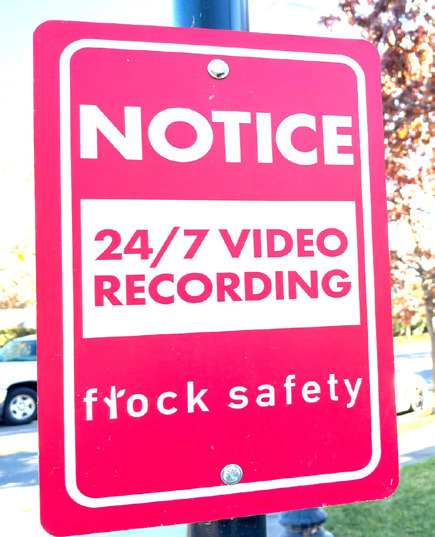
Following intense scrutiny and criticism across the country, the Flock Safety surveillance company says it will be making updates to its automatic license plate reader database system as part of what it says is a continuation of its commitment to both safety and privacy.
Flock founder and CEO Garrett Langley said in a social media post that company has announced changes and a new standard for privacy, security, and accountability in public safety technology.
According to a blog post, multi-factor authentication became mandatory logging in to the system earlier this month, and Flock has also engaged the services of an independent cyber security firm to evaluate its equipment and data systems, with a commitment to publishing the results of that evaluation in September. Projected changes include: Default storage time for license plate reader data will be reduced from 30 days to seven days, with exceptions available for long-term investigations, though agencies can still set their own retention periods independently. Flock is recommending a 7-day ALPR data retention period and introducing Evidence Mode to preserve specific data for active investigations when needed.
Law enforcement agency customers will be required to use Flock’s “Audit Assistance” feature that flags potential misuse using artificial intelligence.
Users the system suspects are misusing the search function will have their access automatically suspended until an administrator reviews their activity.
-Law enforcement agency searches will require a case number or code. Exceptions will be flagged for administrator review.
-Jurisdictions will be able to choose what -Jurisdictions will be able to choose what kinds of searches for which other agencies in the network can utilize their cameras and data.
Customers retain ownership and control of their data, while Flock is expanding transparency and reinforcing safeguards around ALPR accuracy, access, sharing, and review.
The Flock’s update comes after InvestigateTV published an investigation into the dozens of cases of law enforcement allegedly misusing the company’s technology as well as after an earlier report was featured on a prominent late night series.
Some of those accused allegedly utilized Flock’s database for personal searches — many charged not only with abusing their positions, but with stalking or harassment.
Critics have also raised concerns about racial and political profiling, non-law enforcement access to cameras and other data-privacy vulnerabilities created by the sheer volume of data being collected by the company’s nearly 100,000 automated license plate readers.
Because in most jurisdictions there is no requirement for a warrant in order for police to search a tag or track someone’s movements over time, some have questioned the constitutional legitimacy of the technology — including Kentucky Congressman Thomas Massie, who has pledged to introduce a bill that would defund agencies that use Flock cameras, and Tennessee Congressman Tim Burchett, who wants them banned entirely.
According to Flock, abuse of technology, at any level, is unacceptable. Several weeks ago, the company introduced Audit Assistance, which detects abnormal activity and flags it for administrator review. In recent weeks, those reviews have been associated with arrests of several law enforcement officers who allegedly abused the system. Law enforcement agencies using Flock will now be required to adopt this feature by the end of this year. Additionally, Flock claims it will institute proactive lockout when a user’s activity meets defined criteria for abnormal behavior and automatically suspends access pending administrator review.
In July 2025, Flock introduced an optional case code requirement for searches. Results from participating agencies were reported to be promising, and it will now require case codes for all law enforcement searches by the end of the year. Agencies may bypass the requirement in emergencies, but every exigent search will be flagged for administrator review.
A recent story described a wrongful traffic stop involving an auto journalist. The central point is simple: an alert is a lead, not a conclusion, which should be confirmed by an officer.
Flock works on basic optical character recognition that can see the numbers and characters on a license plate and report whatever it sees and goes further using machine learning models trained on plate designs from all 50 states, including stacked and undersized characters, and are retrained weekly as plate designs change. Every read should carry a confidence score, and low-confidence reads are flagged as such, never presented as certainties and never sent as alerts to officers.
Recognition is only the first step. Before an alert goes out, the Flock system matches both the plate and the issuing state against the hotlist record. The system then filters out low confidence reads before sending alerts to officers.
The final safeguard is supposed to be human. Before acting, an officer should visually confirm the plate and that the stop complies with law and agency policy. .