
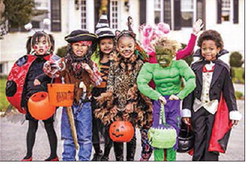

Halloween is enjoyed by people of all ages, but few get a bigger kick out of the holiday than children. There are costumes to be worn, time spent with friends and the opportunity to collect free candy and other treats.
Although Halloween can be a fun time, the Children's Safety Network warns that it's also a time when accidents can happen. According to the CSN, the most dangerous day for child pedestrians is Halloween, with two times as many child pedestrians dying on Halloween compared to other days. It is essential to prioritize safety on Halloween, and following these guidelines can help.
- Make sure costumes are short. Costumes that drag on the floor are tripping hazards, which can lead to injury. Be sure that costumes do not cover the feet or drag on the ground.
- Trick-or-treat in groups. Children are safer in numbers due to the increased visibility of a crowd and because, if something happens, others can call for help. Parents can use their discretion on what age they feel is mature enough to let children go out alone. Until then, children should be accompanied by adults.
- Improve visibility. It's important to be seen while trick-or-treating, and that can be achieved by making sure costumes and trick-ortreat bags feature reflective tape. Trick-or-treaters also can carry flashlights or glow sticks to improve visibility, and stick to areas with streetlights if going out after dark.
- Stay on sidewalks. Whenever possible, trick-ortreaters should stick to the sidewalks and avoid walking on the roads. This may not always be possible in neighborhoods without sidewalks, where parents and youngsters must be especially careful.
- Eat before trick-ortreating. A meal or snack before trick-or-treating can reduce the tendency to fill up on candy while out and about. All candy and other treats should be inspected by an adult before it is eaten.
- Keep pets locked away. Animals can become skittish when there are many people loitering outside of homes or ringing doorbells. Keep pets in a quiet room away from the action to prevent them from getting loose, injured or scared enough to bite or scratch someone.
- Avoid masks that obstruct vision. It can be hard to see peripherally with a mask on, so avoid costumes with masks that compromise vision.
- Test out makeup beforehand. All makeup used for costumes should be tested for allergic reactions prior to use. Heed the warnings on packaging and avoid putting makeup too close to the eyes or lips.
-Light it up Lack of visibility and dim lighting at night increase the risk of pedestrians being struck by cars on Halloween. Improving visibility can go a long way toward cutting down on accidents and related deaths. Homeowners can keep the lights turned on and perhaps illuminate neighborhoods even more by temporarily installing strands of Christmas or bistro style lights.
Children can carry battery-powered flashlights, lanterns or even glow sticks to make them more visible. Reflective tape placed on candy bags or somewhere on costumes also can help.
-Set up safe trick-ortreat zones The popularity of trunkor- treat events that emerged several years ago took some of the risk out of Halloween by containing trick-or-treating to a parking lot at a school or church. Neighbors can establish something similar close to home by petitioning the town for permits to close a specific road or roads to vehicular traffic for a 'block party' of sorts. Residents in the area can trick-or-treat and party in the street without risk of injury from cars. Ask participating neighbors to chip in for refreshments and entertainment, if desired.
-Check candy Generation Xers may recall their parents warned against eating candy from Halloween before it could be inspected for hazards. Unfounded claims of dangerous items being lodged into candy perpetuated the suspicion of all Halloween confections for some time.
There is a risk of eating candy without thought, but that risk is now primarily related to food allergies. The United States Department of Agriculture estimates that, each year in the U.S., allergic reactions to food results in 30,000 emergency room visits, 2,000 hospitalizations, and 150 deaths. Common allergens include peanuts and other nuts as well as eggs and dairy. Others may be intolerant to ingredients like gluten or soy. Inspecting candy nutrition information can help weed out candy that may cause a reaction for those with food allergies or other concerns.
-Prepare homes Adults and parents can take additional steps to prepare their homes for Halloween. Keep the porch and front yard clear of tripping hazards, such as garden hoses, decorations and toys. Sweep away leaves and branches to prevent tripping or slipping. Restrain pets so they do not jump on trickor- treaters. Offer a variety of treats for kids of all ages so trick-or-treaters get ageappropriate items.