
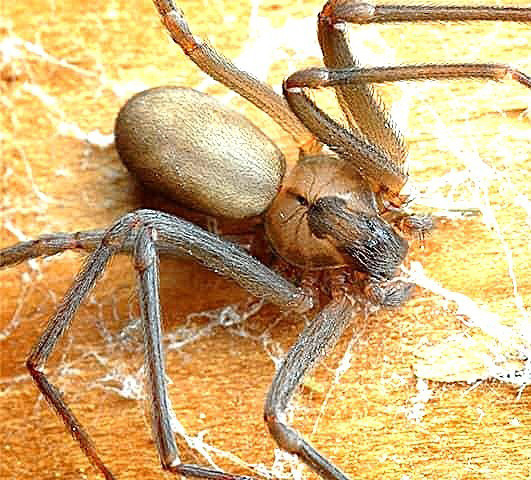
Texas is home to two venomous spider populations, one of which is the brown recluse spider. In a Texas A&M AgriLife article, integrated pest management specialist Wizzie Brown shared facts to help others better understand the commonly feared spider.
Brown recluse spiders are active spring through fall outside as well as other times of the year in climate-controlled spaces. They have two body regions, long, thin legs and are light tan to dark, greyish brown. Including their legs, the spiders are about quarter to half dollar sized.
According to Brown, the best indicators of a brown recluse are their size, color and pattern of three pairs of eyes on the front body section.
Brown said that while many descriptions mention a violin-shaped marking on the back, the markings can be faint and similar to those of non-venomous spiders. Their webs are not distinctive either. “I hear all the time that they are a lot smaller than people think they are,” she said. “But the eye pattern is pretty distinctive. Only one other spider group in Texas has that eye pattern, and they are not venomous.”
The spiders are nocturnal
and hang out in places that are hidden and rarely disturbed.
These areas can include stacks of wood, attics and garages. If unbothered, they will avoid people, so bites usually only happen if someone accidentally touches or scares them.
Brown recommended wearing leather gloves when working outside or in low traffic areas. Stored clothes and shoes should be shaken out or put in the dryer on high heat for about 45 min-utes before being worn. Campers and hikers should check toilet seats in primitive restrooms.
“Summer clothes coming out of winter or vice versa, linens, shoes should all be shaken out,” she said. “A house can offer the perfect habitat for the brown recluse, so you should take steps on the front end to avoid a potential problem with anything that might be in there.” Brown recluse bites are rarely as bad as they are made out to be. Brown said they are usually like other wounds that should be cleaned, dressed with a topical antibiotic and monitored.
“There are other things like antibiotic-resistant staph infections that look similar to spider bites, but that can be far more gruesome than a bite,” she said. “Some photos presented as brown recluse spider bites are horrible, but anyone can put information and photos on the internet.
Unless the person has an allergic reaction to the venom or has some secondary issue that might compound the bite, there is usually not much to worry about.”
Brown said one can use sticky traps to catch spiders and other pests. Pesticides can also be used but make sure to read and follow the directions on the bottle. To help prevent entry into a house, check seals around doors, windows and other places where pests could get in.
“If there is a recurring problem with brown recluse spiders in a location, I could see the need for action,” said Brown.
“But I know of a house that has regular pest control and would catch hundreds of them, but no one had ever been bitten. They want to avoid an encounter with us as much as we want to avoid an encounter with them.”