
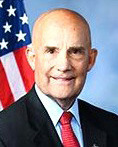
Texas Republican Congressman Keith Self has taken the Flock battle to Washington D.C., and introduced H.R. 9716, known as the PRIVACY Act, to require federal law enforcement to obtain a judge’s warrant before searching automated surveillance data from systems like Flock.
“If you’re going to accept federal dollars, then you need to accept federal strings to those programs,” Self said. He said the power of the purse held by Congress could be key to protecting the rights of Americans. This is only the first step against a larger issue which is big tech. Because big tech is moving so fast, we are about to lose all privacy to big tech unless we start to take these steps.”
Details of the bill include a warrant rule requiring federal agents to ask a judge for a warrant before they query or access state and local data, including automated license plate readers; data collected under a warrant being kept for only 30 days unless used in a court case; and stops federal agencies from using tax money to buy or install the tracking tools.
“Americans’ Fourth Amendment right to be secure in their privacy does not disappear just because of new technology or artificial intelligence,” said Self. “Americans have a constitutional right to be secure in their persons, houses, papers, and effects, and our government is supposed to get a warrant before invading that privacy. This bill simply restores that protection. Get a warrant.”
Congressmen Eli Crane and Andrew Clyde are original cosponsors.
“For decades, Americans’
Fourth Amendment rights have been desecrated as government entities adopt increasingly intrusive surveillance technologies. State and local systems now collect vast amounts of data, and federal agencies use that information to bypass warrant requirements and core privacy protections,” said Congressman Crane.
“As the mass surveillance state has drastically expanded and evolved, so too have threats and violations of Americans’ constitutional liberties. Yet the American people’s Fourth Amendment rights have not changed and are not a suggestion; they are law,” said Clyde.
According to Self, over 6,000 communities in 49 states have installed more than 120,000 Flock, Axon and other manufacturers’ cameras that line our roadways and city parks, tracking Americans more than a billion times a day.
Add in the other technologies such as electronic tracking of cell tower connections, device emissions and wide-area microphones, no American can avoid the reach of technological tracking.
The average American driver has their vehicle surveilled 6-8 times a day, allowing AI to determine their driving habits and track their movements, all without the need for a warrant. This allows large nationwide databases to be established to track every American. Compromises between Fourth Amendment rights and law enforcement have always been part of the American landscape, but technology cannot be allowed to upset that balance. The Supreme Court has ruled that law enforcement cannot collect months of historical location records for no specific purpose, merely because they might want it later. This act codifies the Supreme Court rulings for federal law enforcement, setting specific bounds.
Governor Greg Abbott ordered state agencies to stop using state funds for Flock cameras. The order came amid growing scrutiny over the license plate reader network.