
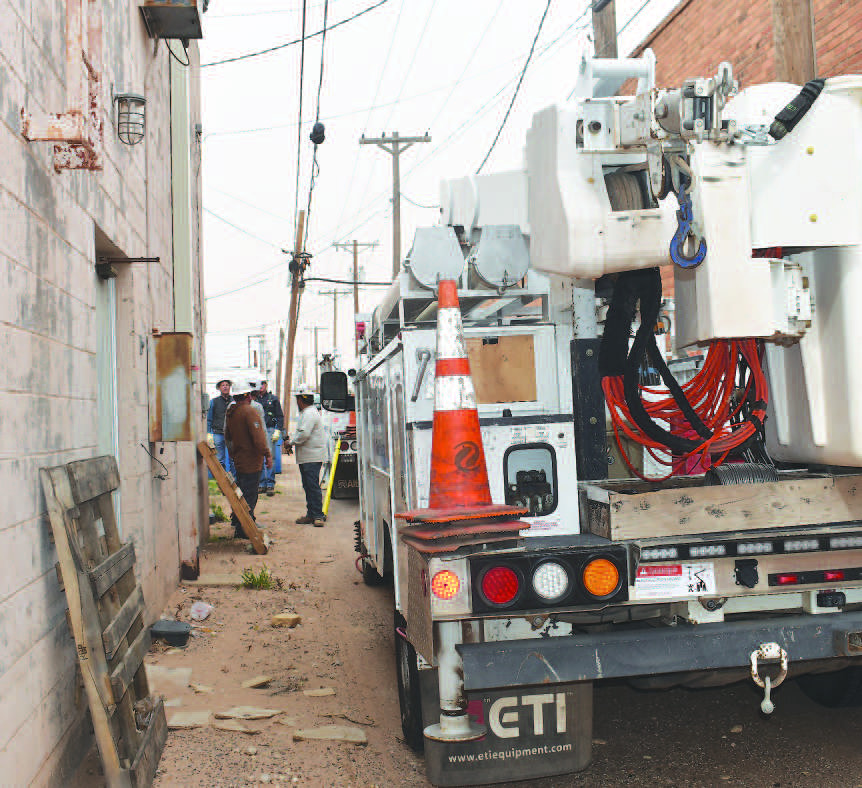
Now the largest wildfire in Texas history, the Smokehouse Creek Fire in Hutchinson County has burned roughly 1.1 million acres across Texas and Oklahoma.
As of Tuesday morning, firefighters had contained 37% of the fire, according to Texas Forest Service officials. Additionally, firefighters have been able to more accurately map the fire and slightly reduced the total acreage still on fire by about 10,000 acres to just under 1.06 million acres.
The blaze was among six burning in the Panhandle as of Tuesday.
In Sanford, the Roughneck fire forced the evacuation of the town, population 132, after starting on Sunday. According to the Forest Service incident website, that fire grew to 355 acres, but firefighters had contained 80% of it by Tuesday morning.
A new fire called the Gray fire also started outside the town of Groom, just south of the Grapevine Fire in Gray County, according to the Texas Forest Service. While that fire hasn’t been contained, it is much smaller than the others, covering an area of about 30 acres. Personnel have been dispatched to fight the blaze.
The National Weather Service in Amarillo did not expect critical fire weather conditions in the region Tuesday. Meteorologists said parts of the Panhandle might see rain and snow later in the week.
Forest Service officials said Monday that firefighting conditions had strengthened since Sunday due to improved weather conditions brought by an arriving cold front in the region.
Officials encouraged people to consult local sheriff’s office’s websites for the most current information about roads.
As the Smokehouse Creek Fire engulfed much of the region last week, residents were told to evacuate or shelter in place. This week, the town’s residents and leaders have begun to calculate the damage.
Officials have yet to release an official count of homes lost to the blazes, but Hemphill County Judge Lisa Johnson estimates that number to be 50, roughly 100 displaced, in a county of less than 3,000. Earlier that week, local officials weren’t sure Canadians would survive at all.
The Texas Panhandle Volunteer Organizations Active in Disaster (VOAD) is helping coordinate volunteering in the area through an online interest form and several organizations have set up funds or are taking donations to help affected residents, including farmers and ranchers.
Officials are still assessing the extent of the wildfires’ destruction in the Panhandle and are asking people whose property has been damaged to report it through an online survey to help identify immediate resource needs.
Wildfires throughout the area have already killed thousands of livestock, destroyed crops and damaged infrastructure.
The ongoing wildfires are another blow as many ranchers tried to rebuild their herds and operations during the cooler months of the year.
Over 85% of the state’s cattle population is located on ranches in the Panhandle, according to the Texas Department of Agriculture. In 2021, agriculture accounted for 9% of Texas’ gross state product, adding $186.1 billion to the state’s economy, according to Texas A&M’s Agrilife Extension report. While numbers on how many cattle were lost in the fires are unknown, experts say ranchers will face significant economic pressure from the damage.
Texas Parks and Wildlife Department had stated that the wildfires have burned over 98% of the Gene Howe Wildlife Management Area, an area of over 5,000 acres located along the Canadian River in the Northern Rolling Plains of Hemphill County.
“Strong winds and warm temperatures have resulted in grasses drying across many portions of Texas,” said Wes Moorehead, Texas A&M Forest Service Fire Chief. “As firefighters continue to suppress active fires, we urge Texans to be cautious with any outdoor activity that may cause a spark.”
Areas with dry grass may support wildfire activity due to accidental ignitions from activities that cause a spark, including fireworks.
Approximately 90% of wildfires are caused by humans and their activities, and holidays and celebrations can pose an increased risk of fire starts.
Governor Greg Abbott directed the Texas Division of Emergency Management (TDEM) to deploy additional state emergency response resources to support wildfire response operations as ongoing wildfires impact the Texas Panhandle on Wednesday.
The Governor also directed TDEM to increase the readiness level of the Texas State Emergency Operations Center (SOC) to Level II (Escalated Response) in support of the state’s around-the-clock response.
“As dangerous wildfires continue to impact the Texas Panhandle, I directed TDEM to immediately deploy additional wildfire response resources to ensure the safety of Texans and impacted communities,” said Governor Abbott. “Thank you to our federal partners at FEMA for quickly approving Texas’ request for grant assistance as we continue to fight these dangerous wildfires. I encourage Texans in affected areas to heed the guidance of local officials and first responders and to take all necessary precautions to keep your family and loved ones safe. We continue to work alongside TDEM, local officials, and emergency response personnel to provide all available resources to protect our fellow Texans.”
In response to a request from the State of Texas, the Federal Emergency Management Agency (FEMA) has approved a Fire Management Assistance Grant (FMAG) request for the Smokehouse Creek Fire and Windy Deuce Fire, meaning that Texas will be eligible for 75% reimbursement from the federal government for costs associated with fighting those fires.
Portions of South Texas continue to face increased wildfire risk, as well as East Texas, amid active burns. Additionally, the Texas A&M Forest Service raised the Wildland Fire Preparedness Level to Level 3 due to an increase in current and expected wildfire activity over the next several days.
While grass fires can occur during winter months, as Texas begins to experience warmer temperatures, low humidity and increased winds, grass fire chances increase dramatically.
Hockley County and surrounding areas has seen minimal acreage burn, however, the threat remains as large areas of land are continuing to dry out and cause increased fuel loading due to the lack of moisture.
Levelland and Hockley County Emergency Management Coordinator Cole Kirkland explained that there is more than an abundance of fuel for a grass fire to get out of hand within the area. Much of the West Texas area has already been categorized as very high to high fire danger this past week with conditions expected to continue through the weekend.
Community members are encouraged to be mindful of controlled burns as they can get out of control. While those have not been an issue, the Levelland Fire Department is reminding citizens that burning is not allowed within the City of Levelland and controlled burns should be called into the LFD before proceeding.
Kirkland explained that some of the factors that have started grass fires could be low hanging chains on trailers causing sparks on roadways, thrown out cigarette buds, power lines or equipment that shorts and causes sparks.
Residents of Hockley County are encouraged to go to RUAWARE.US to register for Hockley County Alerts. Business Owners in Hockley County can go to https://r.iinfo. com/ hockleycobizcontact for business alerts.
Also, individuals are encouraged to check their wireless device has the “emergency alerts by location” turned on. That will allow notifications to come through similar to the amber alerts but are initiated locally for emergency situations such as tornado warning or dynamic police incidents.
Individuals should not assume that getting amber alerts to their phone their settings are correct for the notification; people will have to allow location alerts.
What location alert means is it will send the message based off geographical boundaries; the alert can be isolated to a specific area for only those within the preset boundary to receive the notification. This is a voluntary activation as amber alert system is not voluntary.
All alerts through this system come from local officials; never spam, solicitation calls, text messages or emails. All of the text messages will come from the same number so it can be saved in contacts to be easily recognized.
The phone calls will come through with the office of emergency management number 806-568-5487 so it can be saved and easily recognizable as well.